VOC, MVOC & Formaldehyde Testing
Instrument and laboratory-based assessment of airborne chemicals associated with building materials, furnishings and indoor activities.
This service is commonly requested for new builds, renovations, new furniture installations, or where occupants want objective information about indoor air quality prior to occupation.
When this testing is commonly used
- Following construction or renovation
- After installation of new cabinetry, flooring or furniture
- Prior to handover or occupancy
- Where odours or irritation are reported
- When environmental data is required for due diligence or dispute resolution
Understanding what is being measured
Formaldehyde
A colourless gas commonly released from engineered wood products, joinery, furnishings and some finishes. Levels are influenced by temperature, humidity and ventilation.
Formaldehyde is a known carcinogen.
Testing may involve either laboratory sampling or direct-reading instruments depending on the purpose of the assessment.
VOCs (Volatile Organic Compounds)
A broad group of airborne chemicals emitted from paints, adhesives, sealants, furnishings and household products. Laboratory analysis identifies individual compounds and their concentrations.
MVOCs (Microbial Volatile Organic Compounds)
Gases produced by microbial activity. Detection can provide supporting evidence that mould growth may be present, but MVOC results are not a substitute for building investigation or mould sampling.
What the testing involves
A qualified Building Biologist attends the site to collect samples or undertake direct-reading measurements, depending on the objectives.
Formaldehyde – laboratory sampling
Air is drawn through treated media and sent to an accredited laboratory for analysis.
VOC & MVOC – laboratory sampling
Air is collected over an extended period to capture a representative profile of compounds present.
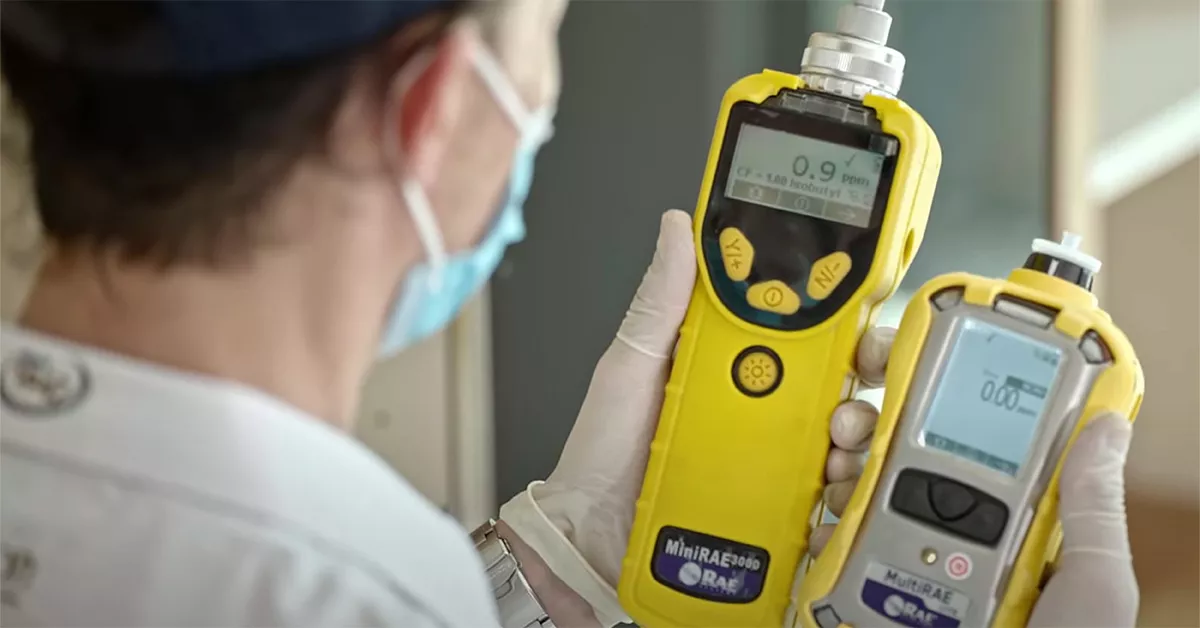
Direct-reading assessments (optional or stand-alone)
Real-time formaldehyde or total VOC measurements can be undertaken using calibrated instruments. These are useful for screening, identifying emission patterns, or assessing changes following ventilation or material removal.
Comprehensive report
Results are interpreted in context, considering building age, materials, ventilation and occupancy stage. Practical recommendations are provided where appropriate.
What you receive
- Laboratory identification of compounds detected
- Concentrations reported in standard units
- Interpretation relative to available guidance
- Commentary on likely emission sources where possible
- Practical strategies to reduce exposure
- Formal documentation suitable for homeowners, builders, suppliers or insurers
Limitations
This assessment measures airborne concentrations at the time of sampling. It does not diagnose medical conditions, define universal safe levels, predict future emissions, or confirm elimination of all sources.
Important note: If microbial growth is suspected, dedicated mould and moisture investigation may be required in addition to MVOC testing. See our Mould & Moisture Assessment.
Discuss Your Situation
An initial discussion helps determine which tests are most relevant to your situation and what level of investigation is appropriate.